Health and Safety Policy for Cleaners Richmond
 Cleaners Richmond is committed to maintaining a safe, healthy, and well-managed working environment for all cleaning staff, supervisors, clients, and any other people who may be affected by our activities. This policy sets out the principles and practices that guide our approach to health and safety, helping us reduce risks, prevent accidents, and ensure that all cleaning services are carried out responsibly.
Our policy applies to all cleaning tasks, including routine maintenance, deep cleaning, sanitisation, waste removal, and specialist surface care. We expect every cleaner to follow safe working methods, use equipment properly, and remain alert to hazards in the workplace. Safety is everyone’s responsibility, and we promote a culture where concerns are reported promptly and action is taken without delay.
 We recognise that cleaning work can involve a range of hazards, such as slips, trips, falls, manual handling injuries, exposure to chemicals, and repetitive strain. To manage these risks, our cleaners are provided with appropriate training, clear instructions, and suitable protective equipment where needed. We also require all staff to use common sense, maintain good housekeeping, and stop work if a task becomes unsafe.
Core Responsibilities
Management is responsible for ensuring that safe systems of work are in place and reviewed regularly. This includes selecting suitable products, providing correct tools, checking that equipment is maintained, and making sure staff understand the safe use of cleaning materials. Supervisors should monitor work practices and intervene when standards are not being met.
Cleaners are expected to take reasonable care of their own safety and the safety of others. They must follow instructions, wear any required personal protective equipment, and report defects, incidents, or near misses as soon as possible. If a cleaner is unsure how to carry out a task safely, they should ask for guidance before continuing.
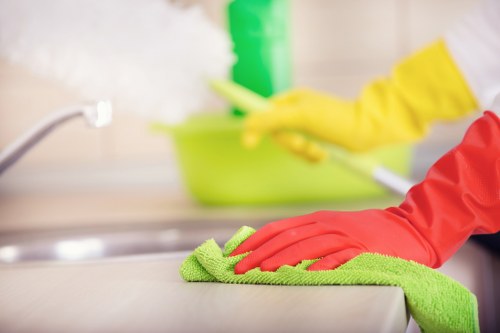 Risk assessment is a central part of our approach. Before work begins, we consider the environment, surfaces, equipment, substances, and access arrangements involved. We aim to identify hazards early and reduce them through practical controls such as warning signs, restricted access, ventilation, and safe storage of materials. This helps ensure cleaning operations remain controlled and efficient.
Safe Working Practices
We require all staff to follow safe lifting and carrying techniques. Heavy items should be moved using trolleys or other suitable aids where possible, and loads should be kept within manageable limits. Cleaners should avoid awkward stretching, overreaching, and rushing. Where tasks involve repetitive actions, breaks and task variation should be considered to reduce strain.
When using cleaning chemicals, staff must read labels, follow dilution instructions, and never mix products unless specifically authorised. Chemicals should be stored securely and handled with care to avoid spills, splashes, or inhalation of fumes. Personal protective equipment such as gloves, masks, or eye protection should be used whenever risk assessments indicate they are necessary.
Floors, stairways, and corridors must be kept as clear as possible while cleaning is in progress. Wet-floor signs, barriers, and other warning measures should be used whenever surfaces may be slippery. Equipment must be inspected before use, and damaged tools should be removed from service immediately. Good communication between cleaners and building occupants also helps reduce accidents and confusion.
Training, Reporting, and Emergency Response
All cleaners receive suitable induction and ongoing training to support safe performance. Training covers safe equipment use, manual handling, chemical awareness, emergency procedures, hygiene, and the reporting of hazards. We review training needs regularly so that staff remain competent and confident in their work.
Any accident, injury, spill, unsafe condition, or equipment failure must be reported promptly through the correct internal process. Reporting helps us investigate causes, identify trends, and put improvements in place. Near-miss reporting is equally important because it allows us to act before harm occurs.
In the event of an emergency, cleaners must follow site procedures and remain calm. This may include evacuating the area, assisting others if it is safe to do so, or contacting the appropriate responsible person. 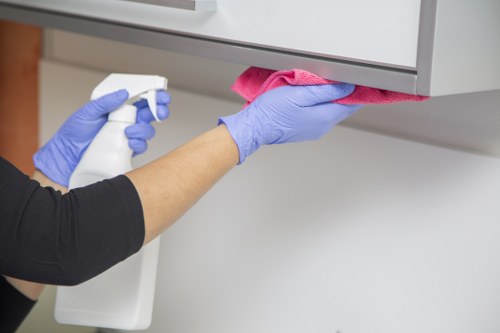 First-aid arrangements, fire safety measures, and emergency exits should always be respected. We expect all personnel to know the basic emergency steps relevant to their workplace.
Monitoring and Review
We will regularly monitor compliance with this policy through supervision, workplace checks, and feedback from incident reports. Where problems are identified, corrective action will be taken quickly. This may include additional training, revised procedures, improved equipment, or stronger supervision. Our aim is continuous improvement, not simply meeting minimum standards.
Health and safety arrangements are reviewed periodically to make sure they remain effective and proportionate to the work being undertaken. Changes in equipment, substances, staffing, or work locations may require updates to procedures. We expect every cleaner to contribute to a safer workplace by following the policy and speaking up about risks.
 Cleaners Richmond believes that a strong health and safety culture protects people, improves service quality, and supports reliable day-to-day operations. By working carefully, using the right controls, and keeping safety at the centre of every task, we can deliver professional cleaning services while protecting everyone involved.